
GHK-Cu
Aenean lacinia bibendum nulla sed consectetur
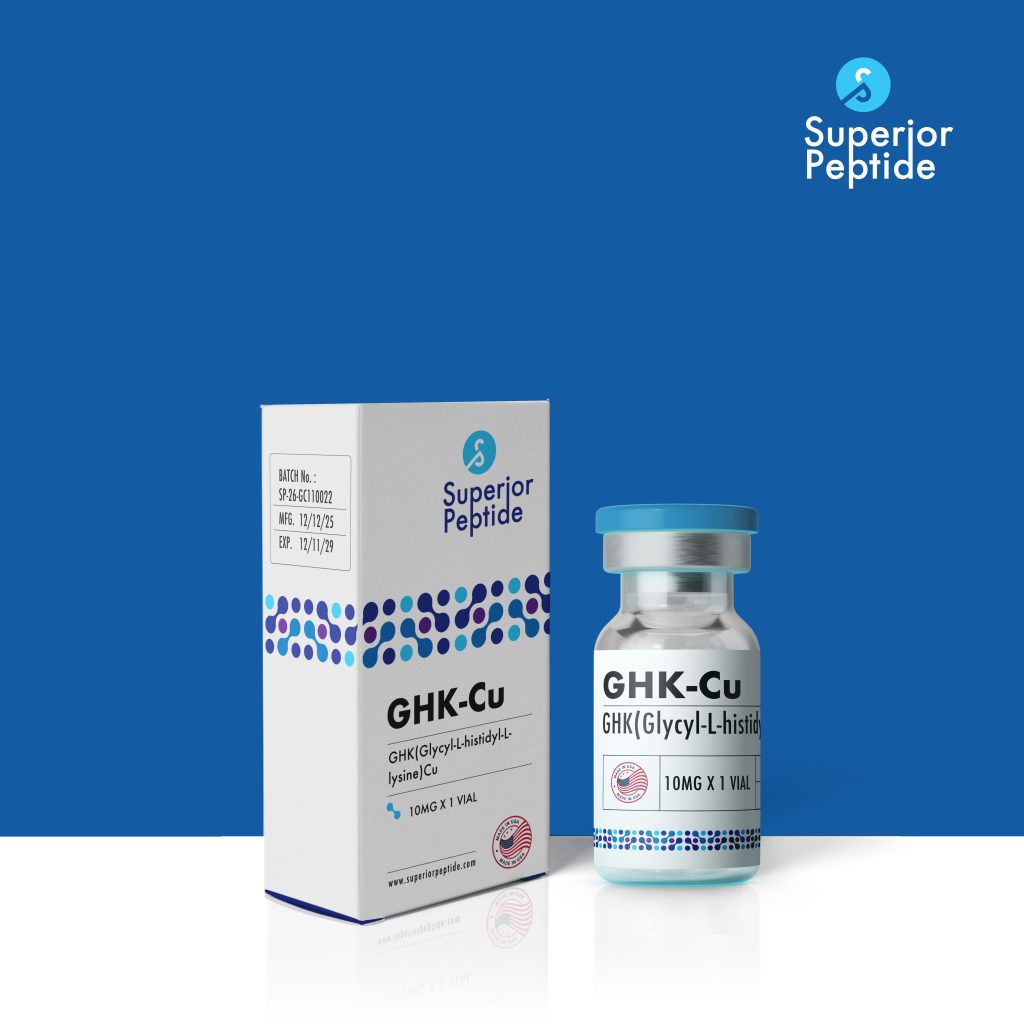
Product Usage
This PRODUCT IS INTENDED AS A RESEARCH CHEMICAL ONLY. This designation allows the use of research chemicals strictly for in vitro testing and laboratory experimentation only. All product information available on this website is for educational purposes only. Bodily introduction of any kind into humans or animals is strictly forbidden by law. This product should only be handled by licensed, qualified professionals. This product is not a drug, food, or cosmetic and may not be misbranded, misused or mislabled as a drug, food or cosmetic.
What is GHK-Cu?
The copper-bound peptide, Glycyl-L-Histidyl-L-Lysine-Copper(II) (GHK-Cu), is a naturally occurring complex ubiquitous in human biological fluids such as plasma, saliva, and urine. This compact tripeptide, GHK, demonstrates a remarkable binding affinity for copper ions, forming a stable structure that is integral to a variety of physiological functions. Revered for its capacity to rejuvenate and safeguard tissues, particularly in the context of remodeling and repair, GHK-Cu is crucial for sustaining healthy skin, accelerating wound closure, encouraging hair growth, and mediating potent anti-inflammatory and antioxidant responses. These diverse biological activities have made GHK-Cu a focal point of research and development in dermatology, cosmetic formulation, and regenerative medicine, where its potential for anti-aging applications and holistic tissue health enhancement is actively explored.
GHK-Cu Structure
Sequence: Glycyl-L-Histidyl-L-Lysine-Copper(II) (GHK-Cu)
Molecular Formula: C₁₆H₂₈CuN₆O₆⁺²
Molecular Weight: 463.98 g/mol
Description
Main Research Findings
1) GHK-Cu was found to elicit a protective effect in lipopolysaccharide-induced acute lung injury through the inhibition of excessive inflammatory responses
2) Treatment of wounds with topical GHK-Cu was found to decrease the amount of time it took to fill the wound with granulation tissue, decrease neutrophil counts, and improve neovascularization.
Selected Data
1) This study performed by the research team of Park et al investigated the protective effects of the tripeptide-copper complex GHK-Cu against lipopolysaccharide (LPS)-induced acute lung injury (ALI), employing both in vitro macrophage cell cultures and an in vivo mouse model. The core materials for the study included GHK-Cu, and key fluorescent probes and antibodies were also critical components. 2′,7′-dichlorofluorescin-diacetate (DCFDA) was used for reactive oxygen species (ROS) measurement. A comprehensive panel of antibodies was utilized for Western blotting, targeting phosphorylated and total forms of ERK1/2, p38 MAPK, JNK1/2, and NF-κB p65 (Ser536), with β-actin serving as a loading control. An additional NF-κB p65 antibody for immunostaining was purchased from Santa Cruz Biotechnology [1].
For the in vitro experiments, a murine macrophage cell line RAW 264.7 was used. Peritoneal macrophages were prepared by injecting 3% thioglycollate intraperitoneally into mice, harvesting the cells four days later. Both RAW 264.7 cells and peritoneal macrophages were maintained in RPMI 1640 medium supplemented with 10% fetal bovine serum, 5% CO₂, and 95% air at 37°C. For cell stimulation, cells were pretreated with various concentrations of GHK-Cu of 1, 5, or 10 µM for 18 hours, followed by stimulation with 100 ng/ml LPS for specific time periods. Cell proliferation was assessed using the 3-(4,5-dimethylthiazol-2-yl)-2,5-diphenyltetrazolium bromide MTT assay. Intracellular ROS levels were detected by incubating cells with 10 µM CM-DCFDA for 30 minutes, then analyzed by Accuri-C6 flow cytometry. Superoxide dismutase (SOD) activity was quantified using a commercial kit, based on the inhibition of WST-1 formazan dye generation. Nitric oxide (NO) secretion was measured using the Griess reagent.
Enzyme-linked immunosorbent assay kits were used to determine the levels of pro-inflammatory cytokines, specifically TNF-α and IL-6, in cell culture supernatants. Immunostaining was performed by seeding cells on glass coverslips, fixing with paraformaldehyde, permeabilizing with Triton X-100, and then incubating with primary anti-NF-κB p65 antibody, followed by Alexa Fluor 546-conjugated secondary antibody. Images were captured using a confocal laser-scanning microscope to assess NF-κB p65 nuclear translocation. Western blot analysis involved preparing whole cell lysates using RIPA lysis buffer, quantifying protein concentration via BCA assay, followed by SDS-PAGE, transfer to nitrocellulose membranes, incubation with primary and HRP-conjugated secondary antibodies, and detection using an ECL solution [1].
The in vivo model utilized 10-week-old male C57BL/6 mice that were housed in environmentally controlled conditions with a 12-hour dark-light cycle, receiving standard laboratory chow and water ad libitum. ALI was induced via intratracheal administration of 1 µg/g LPS dissolved in 50 µl of saline. For GHK-Cu pretreatment, mice received intraperitoneal injections of GHK-Cu of 1 or 10 µg/g every 24 hours for three days prior to LPS administration. Control groups received saline injections. Mice were sacrificed 24 hours post-LPS administration. Histopathological analysis involved fixing left lung lobes in 10% neutral formalin, embedding in paraffin, sectioning into 4 µm thick sections, and staining with hematoxylin and eosin (H&E).
Lung injury was graded from 0 (normal) to 4 (severe) based on neutrophil infiltration, congestion, edema, and alveolar wall thickness. Lungs were harvested, and bronchoalveolar lavage fluid (BALF) was collected by lavaging the trachea twice with 1 ml of ice-cold PBS. BALF was centrifuged to collect supernatants for cytokine and total protein content analysis, while cell pellets were used for differential cell counts via cytospin centrifuge and Hema-3 staining. Myeloperoxidase (MPO) activity, a marker for neutrophil infiltration, was measured in lung tissue homogenates using a previously described spectrophotometric method, assessing H₂O₂-dependent o-dianisidine oxidation. Glutathione (GSH) levels in lung homogenates were determined enzymatically, and NO detection was performed using Griess reagent [1].
2) This study completed by researchers Cangul et al aimed to evaluate the clinical and histopathological effects of topically applied the tripeptide-copper complex (TCC), GHK-Cu, as well as zinc oxide on open-wound healing in rabbits. Eighteen adult, female New Zealand white rabbits, all physically normal and weighing an average of 2.5 kg, were used. The animals were housed individually in suspended stainless steel cages, with ad libitum access to food and water [2].
The rabbits were randomly divided into three treatment groups of six animals each: a TCC group, a zinc oxide group, and a no-treatment control group. On Day 0, each rabbit underwent a surgical procedure to create two full-thickness open wounds. Premedication was administered using 3 mg/kg of xylazine, followed by general anesthesia with 50 mg/kg of ketamine. Lactated Ringer’s solution was provided intravenously at 10 mL kg⁻¹ per hour throughout anesthesia. To prevent infection, a single 30 mg/kg dose of cephazolin sodium was administered preoperatively. For preemptive analgesia, 4 mg/kg of carprofen was given once just before surgery and continued every 24 hours for 3 days postoperatively [2].
The hair on the dorsal midline from the scapula to the ilium region was clipped and the area surgically prepared using polyvidone-iodine. Each rabbit was positioned in sternal recumbency. Two experimental wounds, each 2 cm x 2 cm, were created on either side of the dorsal midline, approximately 4 cm caudal to the scapula. The procedure involved excising the skin and underlying cutaneous trunci muscle using a no. 11 scalpel blade and scissors, creating wounds perpendicular to the spine. Hemorrhage was controlled with sterile surgical sponge compresses. Following the application of topical treatments, the wound areas were bandaged with sterile non-adherent pads and porous adhesive tapes.
As for treatment protocol, wound treatments were applied once daily, before re-bandaging, for 21 days. The TCC group received topical application of tripeptide-copper complex, The zinc oxide group received topical application of zinc oxide. Finally, the control group received no topical treatment. Enough medication was applied to cover the entire wound surface with a thin layer, delivered diagonally across the square wound [2].
Daily observations were made during bandage changes, noting the presence of exudate and monitoring the progression of healing until Day 21. Any hair growth around the wounds was trimmed on Days 14 and 21. Records were kept on the first appearance of granulation tissue and the days when the wound was completely covered with granulation tissue and epithelialized. Planimetry method was used to quantify wound area on Days 0, 7, 14, and 21. Rabbits were anesthetized for these measurements, using the same protocol as for wound creation. The perimeter of each square wound was traced onto a sterile piece of clear acetate film by an examiner wearing a 2.5x loupe. The wound margin, defining the ‘total wound area,’ and the leading edge of the advancing epithelium, defining the ‘unhealed wound area,’ were traced. These tracings were then scanned and transferred to a computer to calculate area and perimeter using SIGMA SCAN Software. The percentage of wound contraction was calculated using a two-step formula comparing the current wound size to the original wound area on Day 0 and converting it to percentage contraction [2].
For histopathological evaluation, skin specimens were collected on Days 7, 14, and 21 using 4-millimeter punch biopsy instruments from different corners of the left-side wound of each rabbit, immediately after planimetry. Specimens were fixed in 10% neutral buffered formalin, processed routinely, and sectioned into 5-micrometer-thick sections. Sections were stained with hematoxylin and eosin (H&E). Histopathological parameters assessed included neutrophil numbers and neovascularization. For each skin section, an area just beneath the epidermis or crust formation was randomly selected, followed by four consecutive areas moving towards the deep dermis. These five selected areas were examined under 400x magnification. Neutrophil numbers were scored on a scale from 1 (0-25 cells) to 4 (>75 cells). The actual count of vessels was also noted. All histological sections were blindly evaluated by the same investigator. A complete blood cell count was performed on each rabbit prior to anesthesia on Day 0, and again on Days 7 and 14, to monitor for any systemic abnormalities [2].
Discussion
1) The results of the study performed by the research team of Park et al comprehensively detail the protective effects of GHK-Cu against LPS-induced inflammation and ALI, beginning with in vitro*experiments on RAW 264.7 macrophages and extending to an in vivo mouse model. In RAW 264.7 macrophages, GHK-Cu significantly mitigated the LPS-induced increase in ROS production. While LPS exposure alone resulted in a 59% increase in oxidized DCF (a measure of ROS) compared to control cells, pretreatment with GHK-Cu at concentrations of 1, 5, and 10 µM significantly decreased ROS production. Concurrently, LPS treatment led to a significant decrease of approximately 19% in SOD activity, a crucial antioxidant enzyme. GHK-Cu pretreatment, across the same concentration range, successfully restored SOD activity to near control levels, highlighting its antioxidant-boosting capabilities. Importantly, GHK-Cu did not negatively impact cell proliferation or NO secretion in these macrophages, suggesting its protective effects were specific to inflammatory pathways rather than general cytotoxicity [1].
Further in vitro analysis revealed GHK-Cu’s capacity to attenuate the release of key pro-inflammatory cytokines. Exposure of RAW 264.7 cells to LPS for four hours dramatically increased the secretion of IL-6 to 613.2 ± 35.1 pg/ml and TNF-α to 1556.3 ± 23.3 pg/ml. However, pretreatment with 10 µM GHK-Cu significantly reduced the secretion of both TNF-α and IL-6 to much lower levels, confirming its anti-inflammatory properties.
Investigating the underlying molecular mechanisms, GHK-Cu was found to block critical signaling pathways. LPS stimulation significantly induced the phosphorylation of NF-κB p65 at Ser536 and promoted its nuclear translocation. GHK-Cu treatment with 1, 5, and 10 µM effectively inhibited both the LPS-stimulated phosphorylation of NF-κB p65 and its subsequent nuclear translocation, thereby suppressing NF-κB activation. This is crucial as NF-κB plays a pivotal role in regulating pro-inflammatory gene expression. Moreover, GHK-Cu significantly inhibited the LPS-induced phosphorylation of p38 MAPK and slightly decreased the phosphorylation of JNK1/2, while having no observable effect on ERK1/2. These findings suggest that GHK-Cu’s anti-inflammatory action is mediated, at least in part, by modulating the p38 MAPK and NF-κB signaling pathways [1].
Moving to the in vivo mouse model of LPS-induced ALI, GHK-Cu demonstrated significant protective effects against lung damage. LPS administration caused characteristic morphological changes in lung sections, including severe immune cell infiltration, interstitial edema, alveolar wall thickening, and hemorrhage, indicative of successful ALI induction. While GHK-Cu treatment alone did not cause any visible histological changes or toxicity, pretreatment with GHK-Cu markedly attenuated these pathological alterations, resulting in a significantly reduced lung injury score compared to the LPS-only group. This macroscopic observation underscored GHK-Cu’s ability to protect lung tissue from acute inflammatory insult.
Consistent with the in vitro findings, GHK-Cu increased antioxidant enzymes and decreased pro-inflammatory cytokines in vivo. LPS administration in mice resulted in decreased SOD activity and total glutathione GSH in lung homogenates. However, pretreatment with 10 µg/g GHK-Cu significantly increased both SOD activity and GSH levels, bringing them to values comparable to control mice. Concurrently, LPS significantly elevated TNF-α and IL-6 levels in BALF, which were markedly decreased in mice pretreated with 10 µg/g GHK-Cu. These results confirm GHK-Cu’s role in bolstering antioxidant defenses and suppressing systemic inflammatory responses in the lung [1].
Figure 2: Changes in A) SOD activity, B) total GSH, C) IL-6 levels in BALF, and D) TNF-alpha levels in BALF across the treatment groups in response to varying doses of GHK-Cu.
Furthermore, GHK-Cu effectively reduced immune cell infiltration and alveolar permeability, critical hallmarks of ALI. MPO activity, a marker for neutrophil presence, and neutrophil counts in the lung were significantly increased by LPS. GHK-Cu pretreatment showed a dose-dependent trend towards lower MPO activity and neutrophil infiltration. The total cell counts and total protein concentration in BALF, indicators of cellular infiltration and increased alveolar permeability, respectively, were significantly elevated by LPS. Again, 10 µg/g GHK-Cu pretreatment significantly decreased both total cell counts and total protein in BALF, demonstrating its ability to maintain alveolar-capillary membrane integrity and reduce inflammatory cell accumulation.
Finally, the in vivo mechanistic studies confirmed the modulation of MAPK and NF-κB signaling pathways. LPS administration induced significant phosphorylation of NF-κB p65 (Ser536), p38 MAPK, and JNK1/2 in lung homogenates. Pretreatment with 10 µg/g GHK-Cu significantly reduced the phosphorylation of both NF-κB p65 and p38 MAPK, and slightly decreased JNK1/2 phosphorylation, with no effect on ERK1/2. These in vivo results align with the in vitro data, consolidating the understanding that GHK-Cu exerts its protective effects in ALI by inhibiting excessive inflammatory responses through its anti-inflammatory and antioxidant properties, mediated by the suppression of NF-κB and p38 MAPK signaling pathways [1].
2) The findings of the study performed by research Cangul et al consistently demonstrated that topical application of TCC significantly enhances open-wound healing in rabbits compared to zinc oxide or no treatment, particularly in the early stages of the healing process.
During daily wound care, TCC-treated wounds initially presented with a bluish film and, on days 2-3, developed a tenacious, purulent-appearing exudate. The underlying tissue in these wounds appeared dark red or mottled by day 7, which was identified as granulation tissue. In contrast, wounds treated with zinc oxide and control wounds remained clean and free of exudate throughout the study, with granulation tissue formation being less remarkable in these groups on days 7 and 8. By day 14, an increased amount of epithelial tissue was observed at the wound edges in both TCC and zinc oxide-treated wounds, with TCC-treated wounds also showing a small elevation of granulation tissue in the center [2].
Planimetry measurements provided quantitative evidence of these clinical observations. The mean unhealed wound area was significantly smaller in the TCC group than in the zinc oxide group on day 7 measuring at 2.76 ± 0.76 cm² vs. 3.22 ± 0.42 cm², respectively. This difference became even more pronounced when comparing TCC-treated wounds to control wounds on days 7, 14, and 21, where the TCC group consistently showed significantly smaller unhealed areas. At day 21, four rabbits in the TCC group and three in the zinc oxide group achieved complete coverage with granulation tissue and epithelialization, with mean healing times of 18.4 and 21.5 days, respectively. Conversely, control group wounds were not completely epithelialized by day 21 [2].
Wound contraction, a critical aspect of healing, was also significantly influenced by TCC. On day 7, the mean percentage of wound contraction was significantly higher in the TCC group by 30.96 ± 19.07% compared to the zinc oxide group by 19.38 ± 10.38%. This superior contraction in the TCC group was maintained and significantly higher than in the control group on days 7, 14, and 21. While the zinc oxide group showed significantly greater wound contraction than the control group on days 14 and 21, its performance was not as rapid as TCC in the initial phase. These findings indicate that TCC actively promotes faster wound closure through contraction.
The median time for the first observable granulation tissue did not differ significantly across TCC, zinc oxide, and control groups by 6.3, 6.7, and 7.6 days, respectively. However, the overall filling of the open wound to skin level with granulation tissue was significantly slower in the control group by 19 days compared to both the TCC group by 10 days and the zinc oxide group by 12 days, highlighting the positive impact of both active treatments on tissue regeneration [2].
Histopathological analysis supported the clinical and planimetric data. Neutrophil scores, a measure of inflammation, generally decreased from day 7 to day 21 across all groups, aligning with the natural progression of healing. However, the average neutrophil count in the control group was significantly lower than in both the zinc oxide and TCC groups at all time points. This suggests that the application of any topical treatment may induce a localized inflammatory reaction in the initial phase.
Regarding neovascularization, a key process for supplying blood to the healing tissue, the number of blood vessels tended to increase from day 7 to day 21 in all groups. Critically, significantly higher vascularization was observed in the TCC group compared to the zinc oxide and control groups when average vascularization degree was compared. Specifically, on day 14, vessel counts were significantly higher in the TCC group at 5.35 ± 0.81 than in the zinc oxide at 1.92 ± 0.78 and control groups at 1.29 ± 1.00. This indicates TCC’s superior ability to promote the formation of new blood vessels [2].
Complete blood cell counts remained within normal limits for all samples taken on days 0, 7, and 14, suggesting that topical applications of TCC and zinc oxide did not result in systemic abnormalities. All rabbits remained clinically healthy throughout the study. The study concluded that TCC led to faster healing and more granulation tissue formation compared to zinc oxide or no treatment, positioning TCC as a better choice for open-wound management in rabbits [2].
Disclaimer
**LAB USE ONLY**
*This information is for educational purposes only and does not constitute medical advice. THE PRODUCTS DESCRIBED HEREIN ARE FOR RESEARCH USE ONLY. All clinical research must be conducted with oversight from the appropriate Institutional Review Board (IRB). All preclinical research must be conducted with oversight from the appropriate Institutional Animal Care and Use Committee (IACUC) following the guidelines of the Animal Welfare Act (AWA).
Citation
[1] Park JR, Lee H, Kim SI, Yang SR. The tri-peptide GHK-Cu complex ameliorates lipopolysaccharide-induced acute lung injury in mice. Oncotarget. 2016;7(36):58405-58417. doi:10.18632/oncotarget.11168
[2] Cangul IT, Gul NY, Topal A, Yilmaz R. Evaluation of the effects of topical tripeptide-copper complex and zinc oxide on open-wound healing in rabbits. Vet Dermatol. 2006;17(6):417-423. doi:10.1111/j.1365-3164.2006.00551.x
GHK (glycyl-L-histidyl-L-lysine) forms a complex with copper in order to form GHK-Cu. GHK-Cu is a peptide that has been shown to play a role in skin repair and wound healing. By supplementing GHK-Cu, there is an increased synthesis of collagen, decorin, chondroitin sulfate, and dermatan sulfate. GHK-Cu was shown to attract immune system cells and endothelial cells to injury sites. Furthermore, a study conducted by Pickert et. Al found that GHK-Cu increases the rate of wound healing decreases rejection of transplanted skin grafts, and even has anti-inflammatory properties.
Pickert et. Al additionally cited various other animal-based studies that indicated GHK-Cu plays a role in wound healing in many forms. GHK-Cu most notably played a role in the acceleration of wound healing and formation of new blood vessels as well as the increase in antioxidant levels in rabbits. Further cited studies found that in dogs, GHK-Cu was shown to repair damage to the GI tract, skin, hair follicles, bone tissues, and even their foot pads. In rats, mice, and pigs, treatment with GHK-Cu assisted in increasing the rate of systemic wound healing. GHK-Cu was also shown to play a role in ischemic and diabetic wound healing in rats, as well as decreasing TNF-alpha levels and increasing collagen synthesis (https://www.ncbi.nlm.nih.gov/pmc/articles/PMC4508379/)
Anti-Inflammatory Effects of GHK-Cu
As it was mentioned above, GHK-Cu is shown to have antioxidant and anti-inflammatory properties. This is due to the fact that GHK is able to inactivate the damaging byproducts released from free radical reactions. GHK was also shown to combat copper-dependent oxidation of low-density lipoproteins, while various other common antioxidants, such as superoxide dismutase, only provided protection against oxidation up to 20%.
CHK-Cu Respiratory Implications
Due to the anti-inflammatory properties of GHK-Cu, researchers tested how the compound would affect acute lung injury and lung damaged due to COPD. It was found that overall GHK-Cu was able to aid in the remodeling and regeneration of connective tissue. Additionally, GHK demonstrated the ability to reverse the expression of various genes, most notably, the gene signature of COPD. In addition to reversing the expression of the COPD gene, it was found that GHK is capable of activating the opposite pathway, TNF-beta.
Researchers also found that when treating mice with GHK-Cu, they were able to protect the lungs from acute injury and were able to stop the filtration of inflammatory cells into the lungs. The study also showed that GHK-Cu was able to decrease the production of IL-6 and TNF-1 while increasing the activity of superoxide dismutase by blocking the activation of NFκB’s p65 and p38 MAPK. The p38 MAPK pathway allows response to external stimuli and can affect levels of apoptosis as well as gene expression and skin differentiation, while the activation of NFκB p65 has shown a correlation to the development of various types of cancer as well as diseases related to aging such as cardiovascular disease, osteoporosis, and Alzheimer’s (https://www.ncbi.nlm.nih.gov/pmc/articles/PMC6073405/).
Peptides Prefer the Cold
In order to reduce peptide breakdown, keep peptides refrigerated at all times but DO NOT FREEZE.
Swab the top of the vial with a 95% alcohol wipe before accessing.
Only Mix with Sterile Bacteriostatic Water
Bacteriostatic water is vital to preventing contamination and preserving the stability of the compound.
Push the needle through the stopper at an angle in order to direct the stream to the side of the vial.
Reconstituted peptide solution should be stored at around 4 degrees Celsius but not frozen, while lyophilized peptide solution should be kept at -20 degrees Celsius.
GHK-Cu is sold for laboratory research use only. Terms of sale apply. Not for human consumption, nor medical, veterinary, or household uses.
Our Other Products


IGF-1 LR3
injectables
,

BPC-157
injectables
,

CJC-1295 DAC
injectables
,

FST-344
injectables
,

GHRP-6
injectables
,